
For parents and guardians raising confident young adults
A Free E-book That Expands How Young Adults See History, Identity, and the World
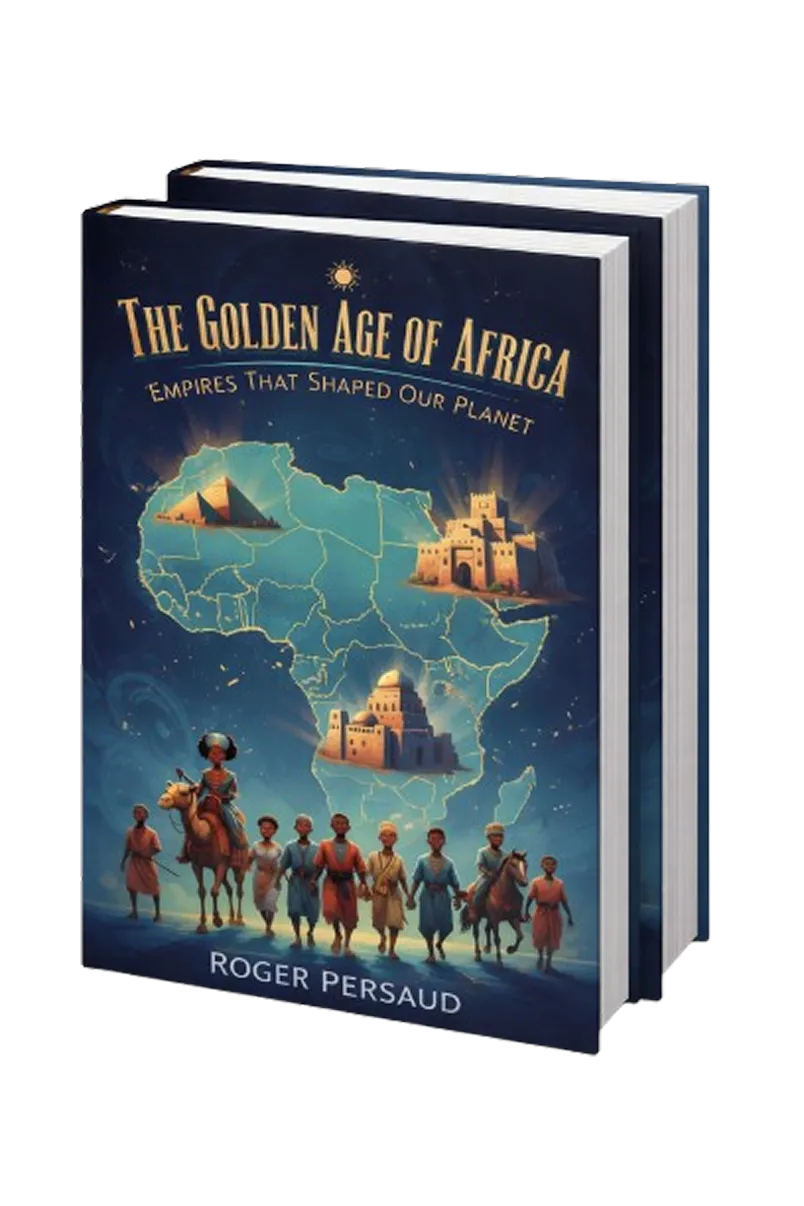
The Golden Age Africa introduces young adults to overlooked histories that build confidence, critical thinking, and empathy helping them develop a broader worldview and a stronger sense of self in an increasingly interconnected world
instant access. free Ebook.
For parents and guardians raising confident young adults
A Free E-book That Expands How Young Adults See History, Identity, and the World
The GOLDEN Age of Africa introduces young adults to overlooked history that build confidence, critical thinking, and empathy helping them develop a broader worldview and a stronger sense of self in an increasingly interconnected world
The Golden Age of Africa introduces young adults to overlooked histories that build confidence, critical thinking, and empathy helping them develop a broader worldview and a stronger sense of self in an increasingly interconnected world.
Instant access. Free Ebook.
For parents and guardians raising confident young adults
A Free E-book That Expands How Young Adults See History, Identity, and the World
The Golden Age Africa introduces young adults to overlooked histories that build confidence, critical thinking, and empathy helping them develop a broader worldview and a stronger sense of self in an increasingly interconnected world
instant access. free Ebook.
4.9/5
Star Rating
100+
Active Readers
500+
E-book Downloaded
4.9/5
Star Rating
100+
Active Readers
500+
E-book Downloaded
What Overlooked History Actually Gives Your Child

A broader worldview
Your child learns that innovation, leadership, and progress have always existed across cultures, not just in one part of the world.

Stronger confidence through representation
Seeing diverse thinkers and civilizations helps children understand that greatness takes many forms and that they belong in the story too.

Sharper critical thinking
They begin asking better questions: “Whose story is missing?” a skill that carries far beyond history class.

Deeper empathy and understanding
Learning different perspectives builds respect, connection, and emotional intelligence, without being forced or taught as a rule.

Real preparation for a global future
The world your child is growing into is diverse and interconnected. This knowledge equips them to navigate it thoughtfully and confidently.
A broader worldview
Your child learns that innovation, leadership, and progress have always existed across cultures, not just in one part of the world.
Stronger confidence through representation
Seeing diverse thinkers and civilizations helps children understand that greatness takes many forms and that they belong in the story too.
Sharper critical thinking
They begin asking better questions: “Whose story is missing?” a skill that carries far beyond history class.
Deeper empathy and understanding
Learning different perspectives builds respect, connection, and emotional intelligence, without being forced or taught as a rule.
Real preparation for a global future
The world your child is growing into is diverse and interconnected. This knowledge equips them to navigate it thoughtfully and confidently.
What Changes After Your Child Reads This
❌Before Downloading Our E-book
History feels distant, boring, or disconnected
Stories center around the same regions and figures
Learning feels like memorization, not discovery
Struggles to connect historical stories to real life
Views the world through a limited, surface-level lens
✅After Downloading Our E-book
Your child sees history as a global story, not a narrow one
They ask better questions: “Whose story isn’t being told?”
Thinks with curiosity, empathy, and broader perspective
Connects past events to the world they see today
They recognize brilliance across cultures and civilizations
This isn’t about making them “good at history.”
It’s about helping them think clearly in a complex world.
What Changes After Your Child Reads This
❌Before Downloading Our E-book
History feels distant, boring, or disconnected
Stories center around the same regions and figures
Learning feels like memorization, not discovery
Struggles to connect historical stories to real life
Views the world through a limited, surface-level lens
✅After Downloading Our E-book
Your child sees history as a global story, not a narrow one
They ask better questions: “Whose story isn’t being told?”
Thinks with curiosity, empathy, and broader perspective
Connects past events to the world they see today
They recognize brilliance across cultures and civilizations
This isn’t about making them “good at history.”
It’s about helping them think clearly in a complex world.

Why Roger Created This Book ?
Meet The Author
Roger believes history should do more than list events it should help young people understand the world they’re growing into.
After seeing how much of the global story is missing from traditional education, Roger set out to create resources that expand perspective, spark curiosity, and build confidence in young readers. Not by overwhelming them with information, but by introducing powerful stories that are often overlooked.
The Golden Age of Africa was written to help children see history as a shared human story rich, diverse, and deeply connected. One that encourages critical thinking, empathy, and a stronger sense of self.
This book isn’t about rewriting history. It’s about completing it.
Every page is designed with parents and young readers in mind, clear, age-appropriate, and grounded in the belief that understanding the past helps children navigate the future with confidence.
Why Roger Created This Book ?
Meet The Author
Roger believes history should do more than list events it should help young people understand the world they’re growing into.
After seeing how much of the global story is missing from traditional education, Roger set out to create resources that expand perspective, spark curiosity, and build confidence in young readers. Not by overwhelming them with information, but by introducing powerful stories that are often overlooked.
The Golden Age of Africa was written to help children see history as a shared human story rich, diverse, and deeply connected. One that encourages critical thinking, empathy, and a stronger sense of self.
This book isn’t about rewriting history. It’s about completing it.
Every page is designed with parents and young readers in mind, clear, age-appropriate, and grounded in the belief that understanding the past helps children navigate the future with confidence.